


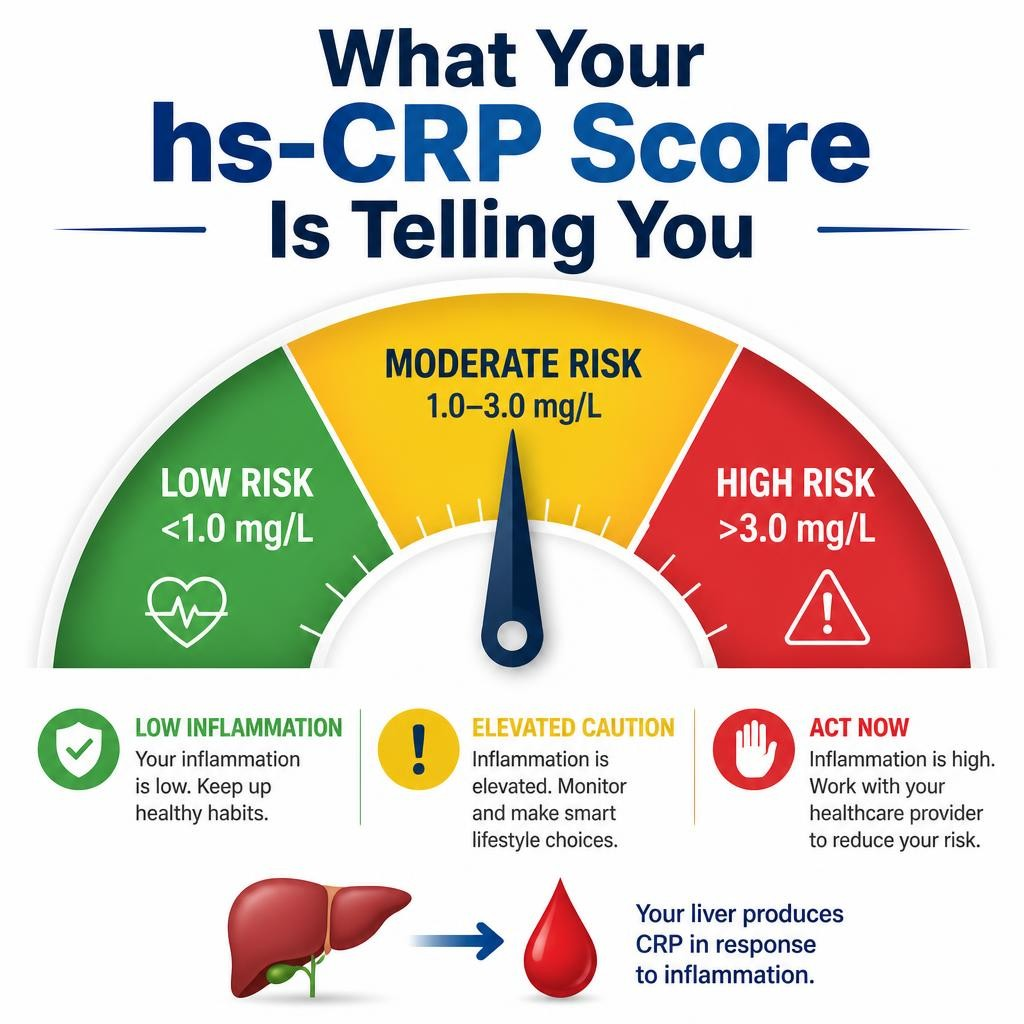
What Is High-Sensitivity CRP (hs-CRP)? Understanding a Marker of Inflammation
Inflammation is a natural part of the body’s immune response. When you have an injury or infection, inflammation helps your body heal. However, when low levels of inflammation remain present over time, it may be associated with certain chronic health conditions.
One blood test that may help healthcare providers better understand inflammation is called a high-sensitivity C-reactive protein test, commonly known as hs-CRP.
What Is hs-CRP?
High-sensitivity C-reactive protein (hs-CRP) is a blood test that measures very small amounts of C-reactive protein, a substance produced by the liver in response to inflammation.
Unlike a standard CRP test, the high-sensitivity version is designed to detect lower levels of inflammation that may not cause noticeable symptoms.
Why Might a Healthcare Provider Order an hs-CRP Test?
An hs-CRP test may be ordered as one piece of your overall health assessment. It can provide additional information that, when combined with your medical history, physical examination, and other laboratory tests, may help your healthcare provider better understand your health.
It is important to remember that hs-CRP is not used by itself to diagnose a specific condition. Instead, it is one part of a much larger picture.
What Can Cause Inflammation?
Many factors can influence inflammation throughout the body, including:
- Acute illness or infection
- Smoking
- Obesity
- Diabetes
- Certain autoimmune conditions
- Chronic inflammatory diseases
- Physical injury
Because many different factors can affect inflammation, healthcare providers interpret hs-CRP results alongside other clinical information.
Supporting Overall Health
While not all causes of inflammation can be prevented, healthy lifestyle habits may help support overall wellness.
Examples include:
- Eating a balanced, nutritious diet
- Participating in regular physical activity
- Maintaining a healthy weight
- Getting enough sleep
- Managing stress
- Avoiding tobacco products
- Working with your healthcare provider to manage chronic health conditions
These habits support overall health and may also benefit heart and metabolic health.
Why This Test Is Only One Piece of the Puzzle
It can be tempting to focus on one laboratory value, but healthcare providers rarely make decisions based on a single test result.
An hs-CRP result is considered alongside many other factors, including:
- Personal medical history
- Family history
- Blood pressure
- Cholesterol levels
- Blood sugar
- Physical examination findings
- Other laboratory results
Looking at the whole picture helps provide a more complete understanding of your health.
Final Thoughts
Inflammation plays an important role in the body’s normal healing process, but ongoing inflammation may be associated with certain chronic health conditions.
The high-sensitivity CRP (hs-CRP) test is one tool that healthcare providers may use when evaluating overall health. If you have questions about your laboratory results or what they may mean for you, talk with your healthcare provider. Together, you can determine the best approach based on your individual health history and needs.


