


Why Is the Flu Vaccine Important Every Year?
As summer comes to an end, many people begin thinking about flu season and whether they should receive a flu vaccine. One of the most common questions healthcare providers hear is, “Why do I need a flu vaccine every year?”
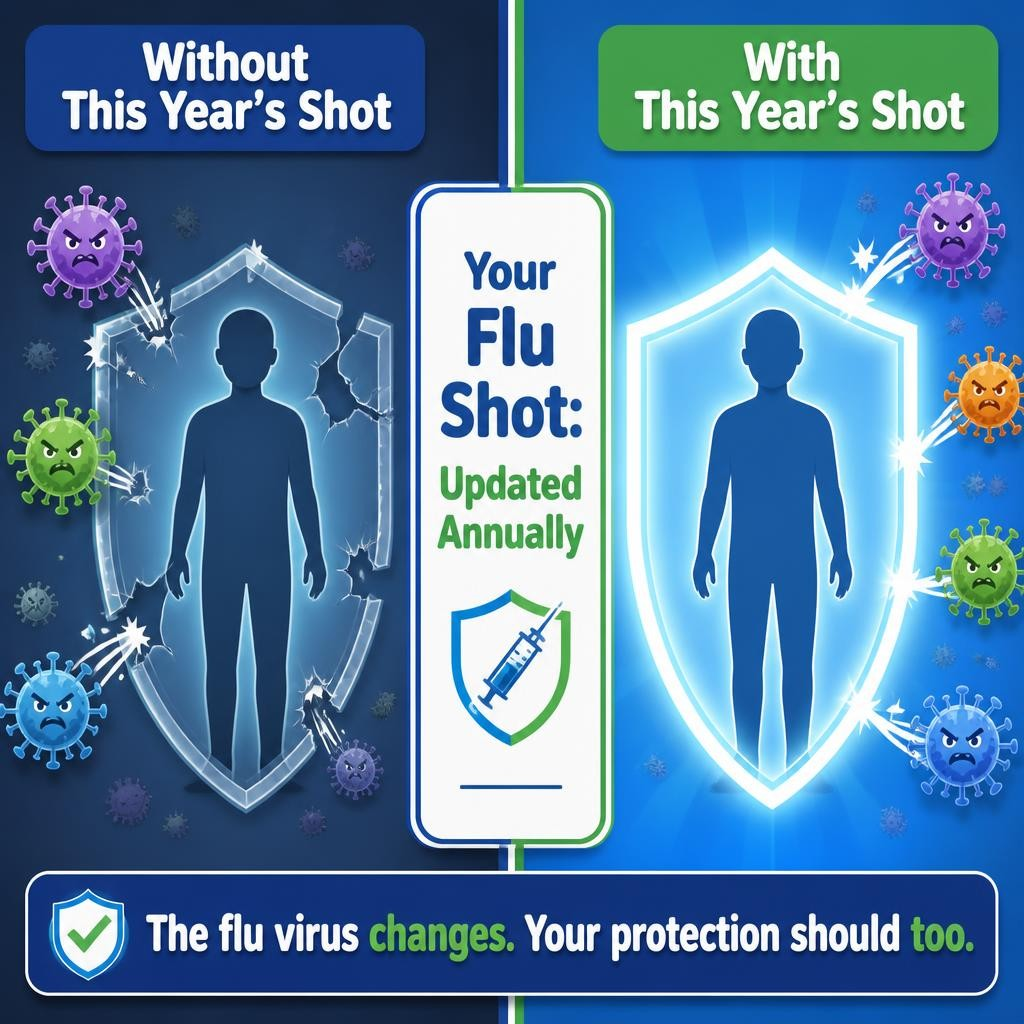
The answer is simple: influenza viruses are constantly changing. The vaccine is updated each year to provide protection against the strains expected to circulate during the upcoming flu season.
Getting vaccinated each year remains one of the best ways to help reduce your risk of influenza and its potential complications.
What Is Influenza?
Influenza, commonly called the flu, is a contagious respiratory illness caused by influenza viruses. While many people recover within several days to two weeks, the flu can sometimes lead to serious complications, particularly in older adults, young children, pregnant individuals, and people with certain chronic medical conditions.
Common flu symptoms may include:
- Fever or chills
- Cough
- Sore throat
- Runny or stuffy nose
- Muscle or body aches
- Headache
- Fatigue
Symptoms often come on suddenly and can interfere with daily activities.
Why Is a New Flu Vaccine Needed Each Year?
Unlike some viruses, influenza changes frequently. Scientists monitor flu viruses circulating around the world and update the vaccine each year to help provide protection against the strains most likely to be seen during the upcoming season.
Because immunity can also decrease over time, annual vaccination helps maintain protection.
Who Should Consider a Flu Vaccine?
The Centers for Disease Control and Prevention (CDC) recommends annual influenza vaccination for most people six months of age and older, with rare exceptions.
Vaccination is especially important for individuals who may be at higher risk of developing serious complications from the flu, including:
- Adults 65 years and older
- Young children
- Pregnant individuals
- People with chronic medical conditions such as asthma, diabetes, or heart disease
- Healthcare workers and caregivers
If you have questions about whether a flu vaccine is appropriate for you, your healthcare provider can help guide that decision.
Common Flu Vaccine Myths
“Can the flu vaccine give me the flu?”
No. Flu vaccines approved for routine use cannot cause influenza. Some people may experience mild soreness at the injection site or temporary fatigue as the immune system responds, but these are not the same as having the flu.
“I’m healthy, so I don’t need it.”
Even healthy individuals can become seriously ill with influenza. Vaccination not only helps protect you but may also reduce the spread of influenza to family members, friends, coworkers, and others who may be more vulnerable.
Protecting Yourself and Your Community
Vaccination is one part of staying healthy during flu season. Other helpful habits include:
- Washing your hands regularly
- Covering coughs and sneezes
- Staying home when you are sick
- Getting adequate sleep
- Eating a balanced diet
- Staying physically active
Together, these healthy habits can help reduce the spread of respiratory illnesses.
Final Thoughts
Each year’s flu vaccine is designed to help protect against the influenza viruses expected to circulate during the upcoming season. While no vaccine can prevent every illness, annual vaccination remains an important tool for reducing the risk of influenza and helping protect both yourself and those around you.
If you have questions about influenza vaccination or when to receive your vaccine, talk with your healthcare provider about what may be best for your individual needs.


