


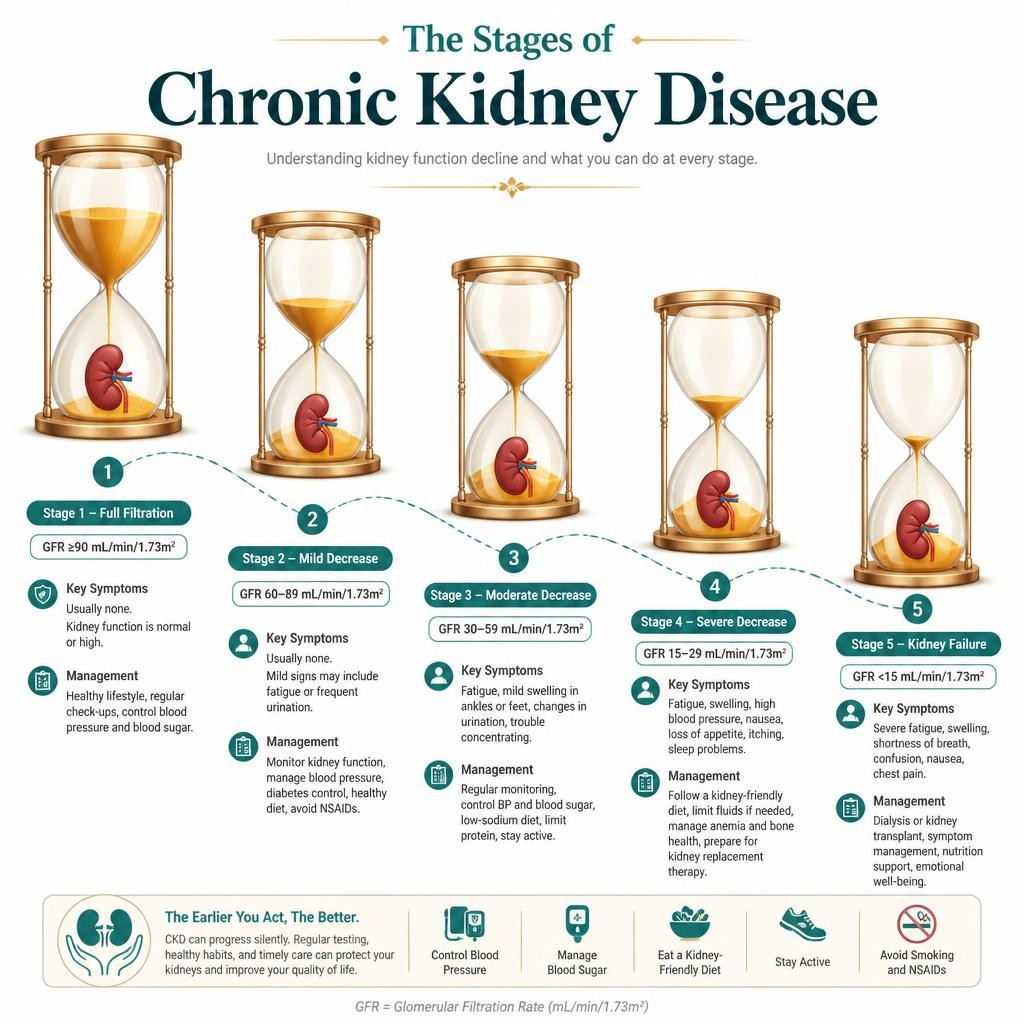
Understanding the Stages of Chronic Kidney Disease (CKD)
Your kidneys may be small, but they perform some very important jobs. They help filter waste and excess fluid from the blood and support many other functions that keep the body working properly.
Chronic kidney disease, commonly called CKD, occurs when the kidneys have abnormalities in their structure or function that persist over time.
Because early kidney disease may not cause obvious symptoms, understanding kidney function and routine laboratory testing can be an important part of protecting your health.
What Do Your Kidneys Do?
Healthy kidneys work around the clock to filter your blood.
In addition to removing waste and excess fluid, the kidneys help:
- Balance important minerals and electrolytes
- Support healthy blood pressure
- Help the body produce red blood cells
- Support bone health
When kidney function declines, these processes may gradually become affected.
How Is Kidney Function Evaluated?
One commonly used measurement is called the estimated glomerular filtration rate, or eGFR.
Your eGFR is calculated using a blood test and provides an estimate of how well your kidneys are filtering your blood.
Healthcare providers may also check your urine for albumin, a type of protein. Increased albumin in the urine can be an important sign of kidney damage.
Kidney health is not evaluated using one number alone. Your provider considers your eGFR, urine testing, medical history, and other health information together.
What Are the Stages of CKD?
Kidney function is commonly grouped into categories based partly on eGFR.
Stage 1
eGFR: 90 or higher
Kidney filtration is normal or high, but there must also be evidence of kidney damage or another abnormality for someone to have CKD at this stage.
Many people have no symptoms.
Stage 2
eGFR: 60–89
Kidney function is mildly decreased. As with Stage 1, an eGFR in this range alone does not necessarily mean someone has chronic kidney disease. Other evidence of kidney damage or abnormal kidney structure or function must also be present.
Symptoms may still be absent.
Stage 3a
eGFR: 45–59
This represents a mild to moderate decrease in kidney function.
At this stage, healthcare providers may monitor kidney function more closely and pay particular attention to conditions that can affect the kidneys.
Stage 3b
eGFR: 30–44
This represents a moderate to severe decrease in kidney function.
Closer monitoring and management of other health conditions become increasingly important as kidney function declines.
Stage 4
eGFR: 15–29
Stage 4 represents a severe decrease in kidney function.
People at this stage generally require close medical management and may be referred to a kidney specialist, called a nephrologist.
Stage 5
eGFR: Below 15
Stage 5 represents kidney failure.
At this stage, specialized care is necessary, and healthcare providers may discuss treatment options based on the individual’s health and circumstances.
eGFR Isn’t the Whole Story
Although eGFR is important, it is only one part of evaluating chronic kidney disease.
Healthcare providers also consider the amount of albumin in the urine. This is commonly measured using a urine albumin-to-creatinine ratio, or uACR.
Albumin levels are generally grouped into three categories:
- A1: normal to mildly increased
- A2: moderately increased
- A3: severely increased
Looking at both kidney filtration and albumin in the urine provides a more complete picture of kidney health.
What Can Increase the Risk of CKD?
Several health conditions and other factors can increase the risk of developing chronic kidney disease.
Common risk factors include:
- Diabetes
- High blood pressure
- Heart disease
- Family history of kidney disease
- Older age
- Obesity
- Certain medications or medical conditions
Diabetes and high blood pressure are especially important because both can damage the kidneys over time.
Why Routine Testing Matters
Early chronic kidney disease may not cause noticeable symptoms.
Someone may feel completely well while changes in kidney function are beginning to occur. Routine blood and urine testing can help identify problems earlier, particularly in people who have risk factors for kidney disease.
It is also important not to panic over one abnormal laboratory result. Kidney function can temporarily change for several reasons, and healthcare providers often look at trends and repeat testing when appropriate.
Supporting Kidney Health
There is no single lifestyle change that prevents every form of kidney disease, but several habits can support overall kidney health:
- Manage blood pressure
- Manage blood sugar if you have diabetes
- Stay physically active
- Maintain a healthy eating pattern
- Avoid tobacco products
- Take medications as directed
- Attend regular medical appointments
- Discuss over-the-counter medications and supplements with your healthcare provider when appropriate
Your individual recommendations may differ depending on your health history and kidney function.
Final Thoughts
Chronic kidney disease can range from mild changes in kidney function to advanced kidney disease. Understanding the stages can make laboratory results feel less confusing and help patients have more informed conversations with their healthcare providers.
Most importantly, an eGFR number should not be interpreted by itself. Kidney health is evaluated using multiple pieces of information and changes over time.
If you have questions about your kidney function, eGFR, urine test results, or risk factors for chronic kidney disease, talk with your healthcare provider about what those results mean for your individual health.


