


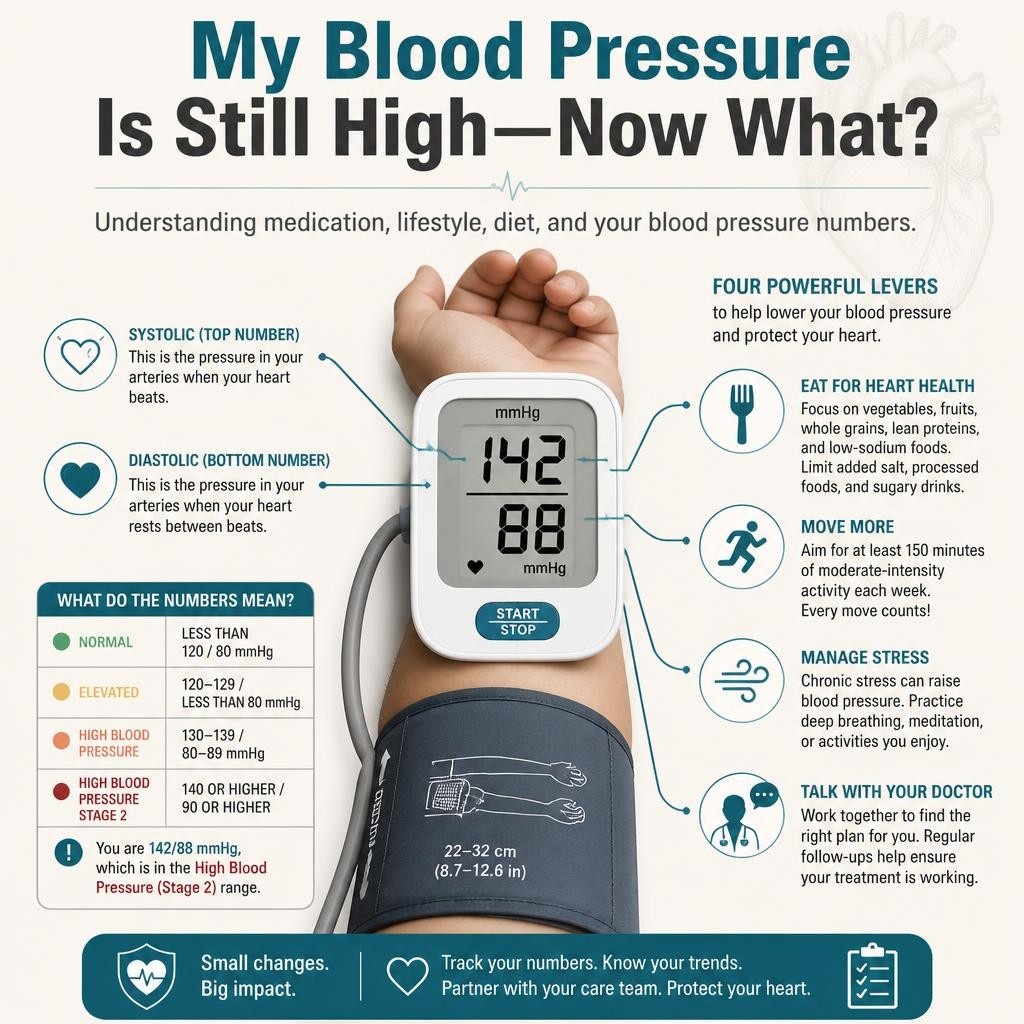
My Blood Pressure Is Still High, Now What?
Managing high blood pressure can sometimes be confusing. You may start medication and expect your numbers to immediately return to normal. Or perhaps your blood pressure has improved and you’re wondering whether you still need medication at all.
The reality is that managing hypertension often takes time, and treatment may include a combination of medication, nutrition, physical activity, weight management, stress management, and regular monitoring.
Understanding what affects your blood pressure can help you have more productive conversations with your healthcare provider.
I Started Medication. Why Is My Blood Pressure Still High?
Blood pressure medication doesn’t always produce the desired results immediately.
Some people may need a medication adjustment, while others may need more than one medication to adequately control their blood pressure. Your healthcare provider will consider your readings, medical history, other medications, and overall health when determining the best approach.
Lifestyle factors and certain medical conditions can also make blood pressure more difficult to control.
These may include:
- High sodium intake
- Excess weight
- Physical inactivity
- Stress
- Alcohol use
- Sleep apnea
- Diabetes
- Kidney disease
- Certain medications or supplements
- Other underlying health conditions
This is one reason regular follow-up is important when treating hypertension.
Current hypertension guidelines recognize that some patients particularly those with stage 2 hypertension may require more than one medication to reach their treatment goal.
My Blood Pressure Is Better. Can I Stop My Medication?
Seeing your blood pressure improve is encouraging, but improved numbers may be a sign that your treatment is working.
You should not stop or reduce a prescribed blood pressure medication on your own simply because your readings have improved.
Your healthcare provider can evaluate your blood pressure trends and determine whether medication changes are appropriate.
Home blood pressure readings can be particularly helpful because they provide more information than a single measurement taken during an office visit. The American Heart Association recommends home monitoring for people with high blood pressure and specifically advises patients not to stop medication without consulting their healthcare professional.
Does My Diet Really Affect My Blood Pressure?
Yes. What you eat can play an important role in blood pressure management.
Sodium is one area that deserves particular attention. Most dietary sodium doesn’t actually come from the saltshaker it comes from packaged, prepared, and restaurant foods.
Reading nutrition labels can help you become more aware of how much sodium you’re consuming.
A heart-healthy eating pattern such as the DASH eating plan emphasizes foods including:
- Vegetables
- Fruits
- Whole grains
- Beans and legumes
- Nuts and seeds
- Low-fat or nonfat dairy
- Lean sources of protein
Current blood pressure guidelines continue to recommend a heart-healthy eating pattern, reducing sodium, physical activity, weight management, stress management, and reducing or eliminating alcohol as important parts of hypertension management.
Why Are My Numbers Different at Home?
Blood pressure naturally changes throughout the day.
Activity, stress, caffeine, medications, pain, and even how your blood pressure is measured can affect a reading.
That’s why one number doesn’t always tell the whole story.
If your provider recommends home monitoring, try to measure your blood pressure consistently and keep a record of your readings. Looking at patterns over time can provide valuable information about how well your treatment is working.
Treatment Is About More Than One Number
Managing hypertension isn’t simply about getting one good blood pressure reading.
The long-term goal is to reduce the strain that high blood pressure places on your heart, blood vessels, brain, kidneys, and other organs.
Medication may be one part of that plan. Nutrition, activity, sleep, weight management, stress management, and treatment of other health conditions may also be important.
Final Thoughts
High blood pressure treatment sometimes requires adjustments along the way. If your blood pressure remains elevated or if your numbers improve significantly don’t make medication changes on your own.
Keep track of your readings and talk with your healthcare provider about what they mean and whether your current treatment plan is working as intended.


