


Why Am I Gaining Weight After 40?
If you feel like your body has changed and what used to work, no longer does you’re not imagining it.
Many people find it harder to maintain or lose weight after age 40. Even if you haven’t changed much about how you eat or move, the number on the scale may slowly go up. That can feel frustrating and confusing.
The good news: there are real reasons behind these changes and there are practical steps that can help.
What Changes After 40?
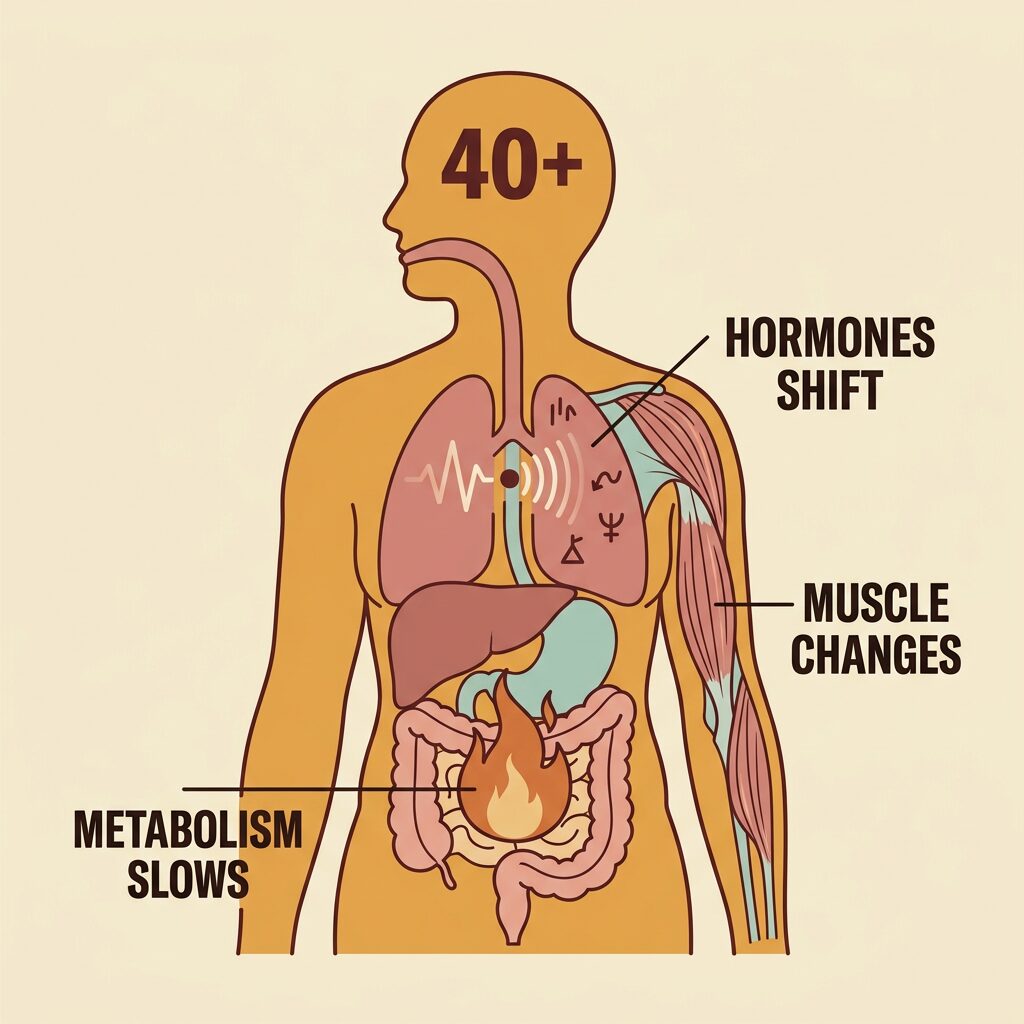
As we age, a few natural shifts can make weight changes more likely:
- Your metabolism slows down, so you burn fewer calories at rest.
- You gradually lose muscle, which can lower how many calories your body uses.
- Your hormones change (like estrogen and testosterone), which can affect hunger and where your body stores fat.
These changes don’t happen overnight but over time, they can add up.
Common Causes of Weight Gain
Weight gain after 40 is usually not caused by just one thing. It’s often a combination of factors:
Hormonal Changes
Shifts in hormones can affect appetite, fat storage, and energy levels. This is especially noticeable during perimenopause and menopause for women, but men experience hormonal changes as well.
Loss of Muscle Mass
Muscle helps burn calories. As muscle decreases with age, your body may require fewer calories but you’re eating habits may not change at the same pace.
Changes in Sleep
Sleep often becomes lighter or more disrupted over time. Poor sleep can impact hunger hormones and increase cravings.
Stress and Cortisol
Chronic stress can lead to increased cortisol levels, which may contribute to weight gain especially around the midsection.
Insulin Resistance
Over time, your cells may not respond to insulin as well. (Insulin is a hormone that helps move sugar from your blood into your cells for energy.) When your body is more “insulin resistant,” it may be easier to store fat and harder to lose weight.
Why It Feels So Frustrating
A common thing patients tell us is:
“I’m doing the same things I’ve always done, and it’s not working anymore.”
That feeling is valid. The body changes, and strategies that worked in your 20s or 30s may need to be adjusted.
What Can Help Support Your Body
While there’s no one-size-fits-all solution, a few key areas can make a meaningful difference:
- Strength training to help maintain and build muscle
- Balanced nutrition, including adequate protein
- Prioritizing sleep and recovery
- Managing stress levels
- Working with a healthcare provider to evaluate underlying factors
In recent years, there has also been growing research into how metabolism, hormones, and appetite regulation can be supported in new ways. These advances are helping shape how we approach weight management today.
When to Talk with a Provider
- You gain weight quickly or without a clear reason
- You’re feeling very tired, down, or unlike yourself
- You have new symptoms like hair thinning, feeling cold often, or constipation
- Your periods change a lot, or you think you may be in perimenopause/menopause
- You want help creating a plan that fits your health history and medications
A quick visit and a few questions (and sometimes lab work) can help rule out issues like thyroid problems, medication side effects, or blood sugar concerns.
Final Thoughts
Weight gain after 40 is common. But you don’t have to ignore it or blame yourself without understanding what’s going on.
If you’ve noticed changes in your weight or overall health, talk with your healthcare provider. Together, you can look at possible causes and choose options that make sense for your goals.


