


How Does High Blood Pressure Affect Your Kidneys?
Your heart and kidneys may seem like completely separate parts of the body, but they work together more closely than many people realize.
High blood pressure can affect kidney health, and kidney disease can also make blood pressure more difficult to control.
Understanding this relationship is an important part of protecting both cardiovascular and kidney health.
What Do Your Kidneys Do?
Your kidneys continuously filter your blood, removing waste and extra fluid from the body.
They also help regulate several important body functions, including blood pressure.
To perform these jobs, the kidneys depend on a healthy network of blood vessels.
How Can High Blood Pressure Damage the Kidneys?
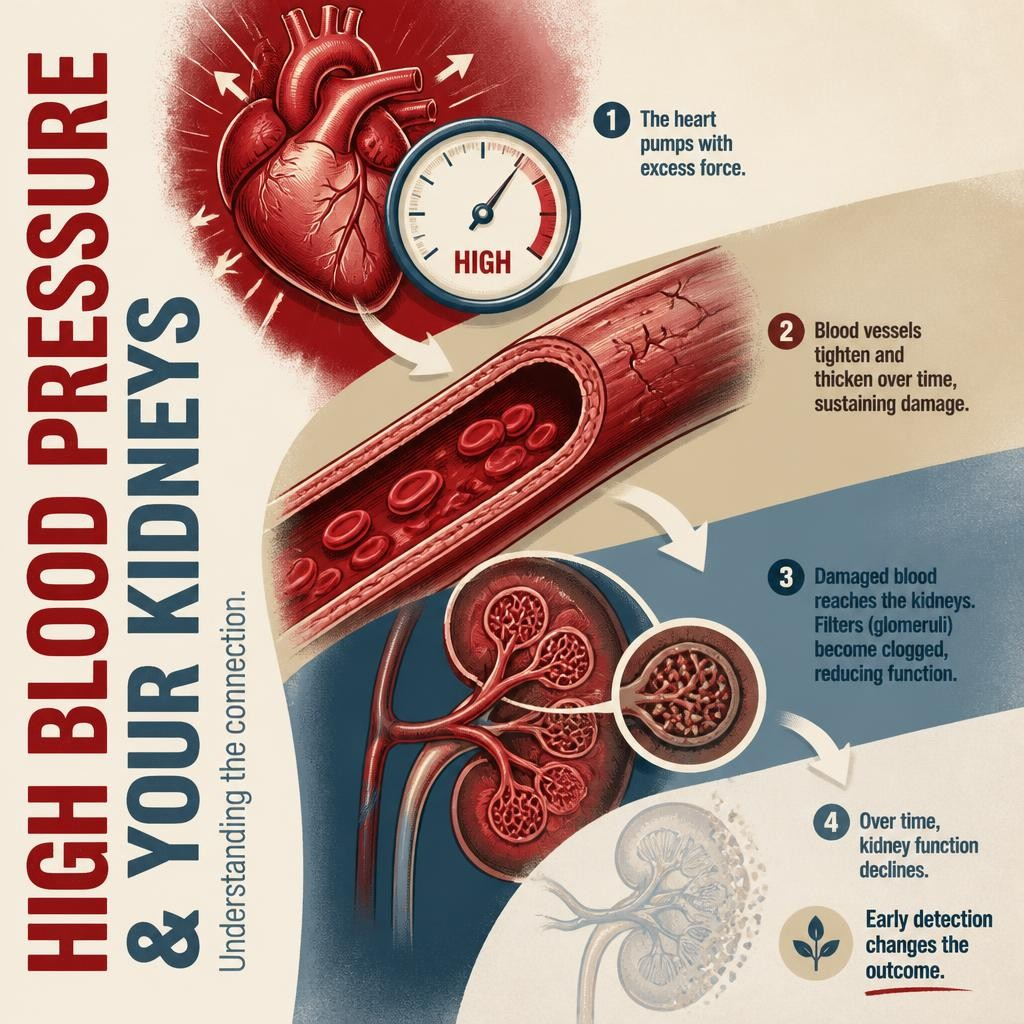
High blood pressure places additional force on blood vessel walls throughout the body.
Over time, high blood pressure can narrow, weaken, and damage blood vessels including the small vessels that supply the kidneys.
When these vessels become damaged, the kidneys may not receive the blood flow they need to filter waste and excess fluid effectively.
The Connection Can Go Both Ways
This is where things become especially important.
High blood pressure can contribute to kidney damage.
But kidney disease can also contribute to high blood pressure.
When damaged kidneys have difficulty removing extra fluid and regulating processes involved in blood pressure, blood pressure may rise further.
That can create a cycle in which hypertension damages the kidneys and declining kidney function makes hypertension harder to manage.
Will I Know If My Kidneys Are Being Affected?
Not necessarily.
High blood pressure often produces no obvious symptoms, and early chronic kidney disease may also occur without noticeable symptoms.
That’s why regular blood pressure checks and appropriate blood and urine testing are particularly important for people at increased risk.
How Is Kidney Health Monitored?
Your healthcare provider may use several pieces of information, including:
- Blood pressure readings
- Creatinine
- eGFR
- Urine albumin testing
- Medical history
- Medications
- Diabetes status
- Other laboratory results
Looking at all of these together provides a better picture than relying on one measurement alone.
Protecting Both Your Blood Pressure and Your Kidneys
Managing blood pressure is an important part of protecting kidney health.
Depending on your individual situation, your healthcare provider may recommend a combination of:
- Blood pressure medication
- Reduced sodium intake
- Regular physical activity
- Weight management
- Diabetes management when applicable
- Avoiding tobacco
- Adequate sleep
- Regular monitoring
Some blood pressure medications may also be selected specifically because of their benefits in people with certain forms of kidney disease. Treatment should always be individualized by a healthcare provider.
Don’t Stop Blood Pressure Medication Because Your Numbers Improve
If your blood pressure reaches a healthier range while you’re taking medication, that may mean your treatment is doing its job.
Don’t stop prescribed blood pressure medication without talking with your healthcare provider first.
Final Thoughts
Your heart, blood vessels, and kidneys are closely connected.
Managing high blood pressure isn’t only about improving the number on the blood pressure monitor it can also help protect important organs, including your kidneys.
If you have high blood pressure, kidney disease, or concerns about your kidney function, talk with your healthcare provider about your individual blood pressure goals, kidney testing, and treatment plan.


