


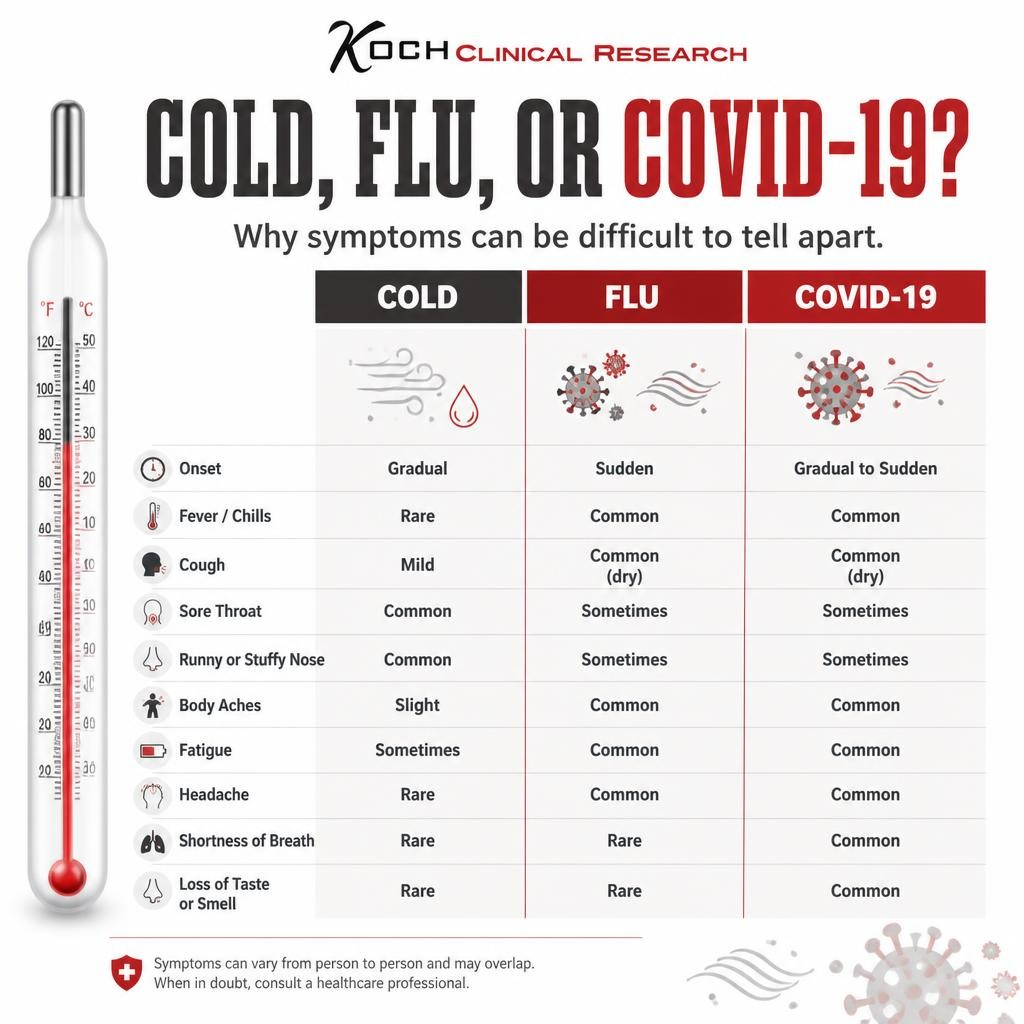
Cold, Flu, or COVID-19? Why Symptoms Can Be Difficult to Tell Apart
A sore throat, cough, runny nose, or fever can leave you wondering: Is it just a cold, or could it be something else?
Colds, influenza (flu), and COVID-19 are all respiratory illnesses, and many of their symptoms overlap.
Although certain symptoms may be more common with one illness than another, it isn’t always possible to know which infection you have based on symptoms alone.
What Do These Illnesses Have in Common?
Colds, flu, and COVID-19 are caused by viruses that can affect the respiratory system.
All three may cause symptoms such as:
- Cough
- Sore throat
- Runny or stuffy nose
- Fatigue
- Headache
- Body aches
- Fever
Symptoms can range from mild to more severe depending on the infection and the individual.
Is There a Difference Between a Cold and the Flu?
The common cold is usually associated with milder symptoms, including a runny nose, congestion, sneezing, and sore throat.
Influenza often begins more suddenly and may cause fever, chills, muscle aches, headache, and significant fatigue.
However, these are general patterns rather than reliable ways to diagnose an illness.
Some people with influenza never develop a fever.
What About COVID-19?
COVID-19 can cause many of the same symptoms as influenza and the common cold.
Some people experience mild symptoms, while others develop more serious illness.
Because symptoms overlap, testing may be needed to determine whether someone has COVID-19, influenza, or another respiratory infection.
Why Does Knowing Which Virus You Have Matter?
Identifying the cause of a respiratory illness may help guide treatment decisions.
For example, certain antiviral medications are available for influenza and COVID-19. These treatments are most beneficial when started within recommended timeframes, especially for people at increased risk of complications.
Testing may also help healthcare providers make decisions about follow-up care and help patients take appropriate precautions around others.
How Do Respiratory Tests Work?
Depending on the test, a healthcare professional or patient may collect a sample from the nose or another approved collection site.
Different tests look for different signs of infection.
Some tests detect proteins from a virus, called antigens. Others detect genetic material from the virus.
Tests may be designed to detect one virus or several respiratory viruses.
The accuracy of a test can depend on several factors, including the type of test, how the sample is collected, and when testing occurs during the illness.
A negative result does not always rule out an infection, particularly if testing occurs early or the test has lower sensitivity.
When Should You Contact a Healthcare Provider?
Consider contacting your healthcare provider if symptoms are worsening, you’re concerned about your illness, or you have health conditions that increase your risk of complications.
Older adults, pregnant individuals, young children, and people with certain chronic medical conditions may be at greater risk of serious respiratory illness.
Seek emergency medical care for severe symptoms such as difficulty breathing, persistent chest pain, new confusion, or other emergency warning signs.
What Can You Do to Reduce the Spread of Respiratory Illness?
Helpful preventive measures include:
- Washing your hands regularly
- Covering coughs and sneezes
- Improving indoor ventilation when possible
- Staying home and away from others when sick
- Following current public health recommendations for respiratory illnesses
- Discussing recommended vaccinations with your healthcare provider
Final Thoughts
Cold, flu, and COVID-19 symptoms can be surprisingly similar, making it difficult to identify an illness based on symptoms alone.
Understanding the role of testing and knowing when to seek medical care can help you make informed decisions when respiratory symptoms develop.
If you’re unsure what may be causing your symptoms, especially if you’re at higher risk of complications, talk with your healthcare provider about whether testing or treatment is appropriate.


