


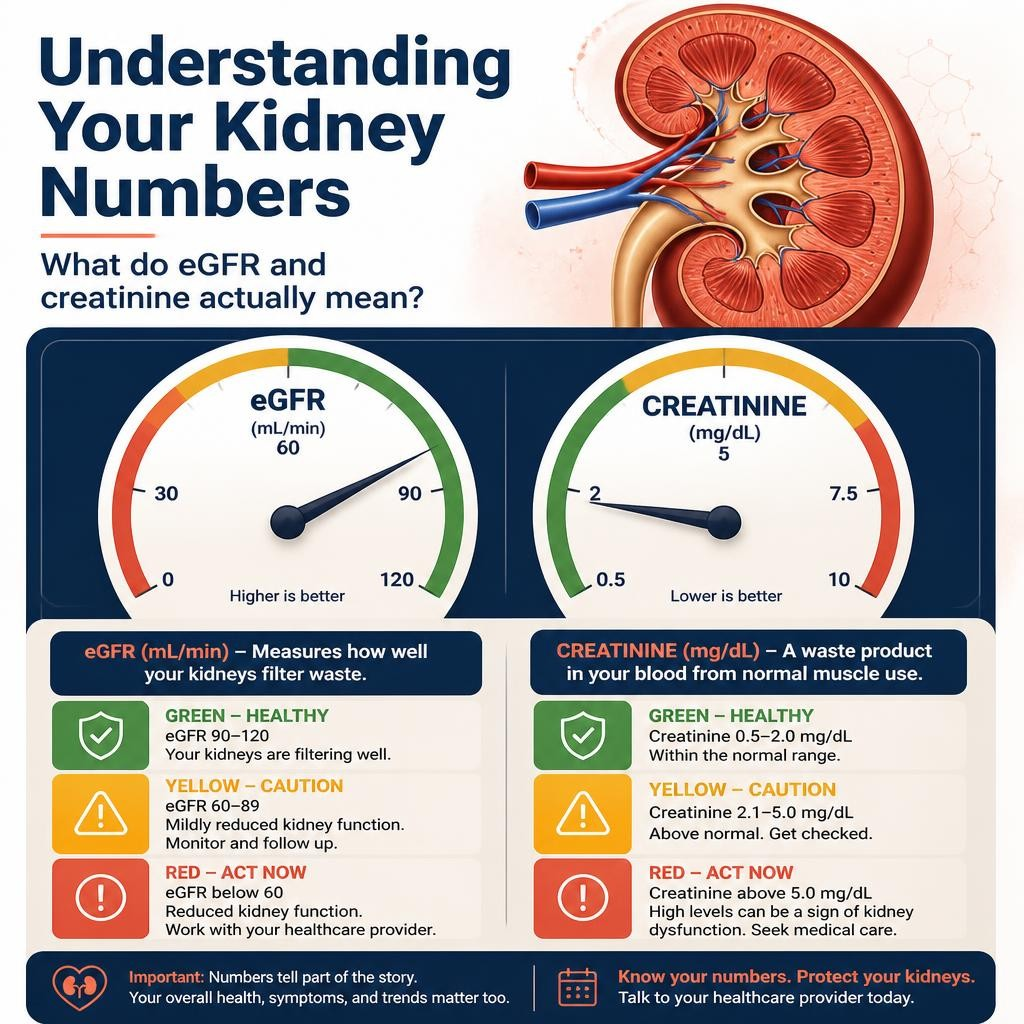
What Do eGFR and Creatinine Tell You About Your Kidneys?
If you’ve ever looked at your blood test results online, you’ve probably seen terms like creatinine and eGFR.
But what do those numbers actually mean?
Both provide useful information about kidney function, but neither number should be interpreted completely on its own.
What Is Creatinine?
Creatinine is a waste product produced during normal muscle activity.
Your kidneys normally filter creatinine from your blood and remove it through your urine.
Because the kidneys are responsible for removing creatinine, measuring the amount in your blood can provide information about how well your kidneys are filtering.
However, creatinine levels can also be influenced by factors other than kidney disease, which is why healthcare providers don’t usually rely on this number alone.
What Is eGFR?
eGFR stands for estimated glomerular filtration rate.
Rather than directly measuring kidney filtration, eGFR uses information from your blood testing and other factors to estimate how effectively your kidneys are filtering your blood.
Your healthcare provider may use eGFR to help identify changes in kidney function and monitor those changes over time.
Why Does the Trend Matter?
One abnormal laboratory result doesn’t necessarily tell the entire story.
Kidney-related laboratory values can change, and healthcare providers often look at patterns over time rather than focusing only on a single result.
That’s one reason your provider may repeat blood work if a result is unexpected.
Your medical history, medications, other health conditions, and additional laboratory results also help provide context.
What About Protein in the Urine?
Blood testing is only part of evaluating kidney health.
Healthcare providers may also check urine for albumin, a protein that normally stays in the bloodstream.
Increased albumin in the urine may be a sign of kidney damage.
This is why someone can have an eGFR that appears relatively preserved but still require further evaluation of kidney health.
What Conditions Can Affect Kidney Health?
Several health conditions can increase the risk of kidney disease, including:
- Diabetes
- High blood pressure
- Heart disease
- Obesity
- Family history of kidney disease
- Certain medications and medical conditions
High blood pressure and kidney health are especially closely connected.
Why Routine Testing Matters
Early chronic kidney disease may not cause noticeable symptoms.
Blood and urine testing can sometimes identify changes before someone feels unwell, particularly in people who have risk factors for kidney disease.
Understanding these tests can also make reviewing your laboratory results less intimidating.
Final Thoughts
Creatinine and eGFR provide important information about kidney function, but neither should be interpreted in isolation.
Your healthcare provider considers your laboratory trends, urine testing, medical history, medications, and other health information when evaluating your kidneys.
If you have questions about your eGFR, creatinine, or other kidney test results, talk with your healthcare provider about what those numbers mean for you.


