


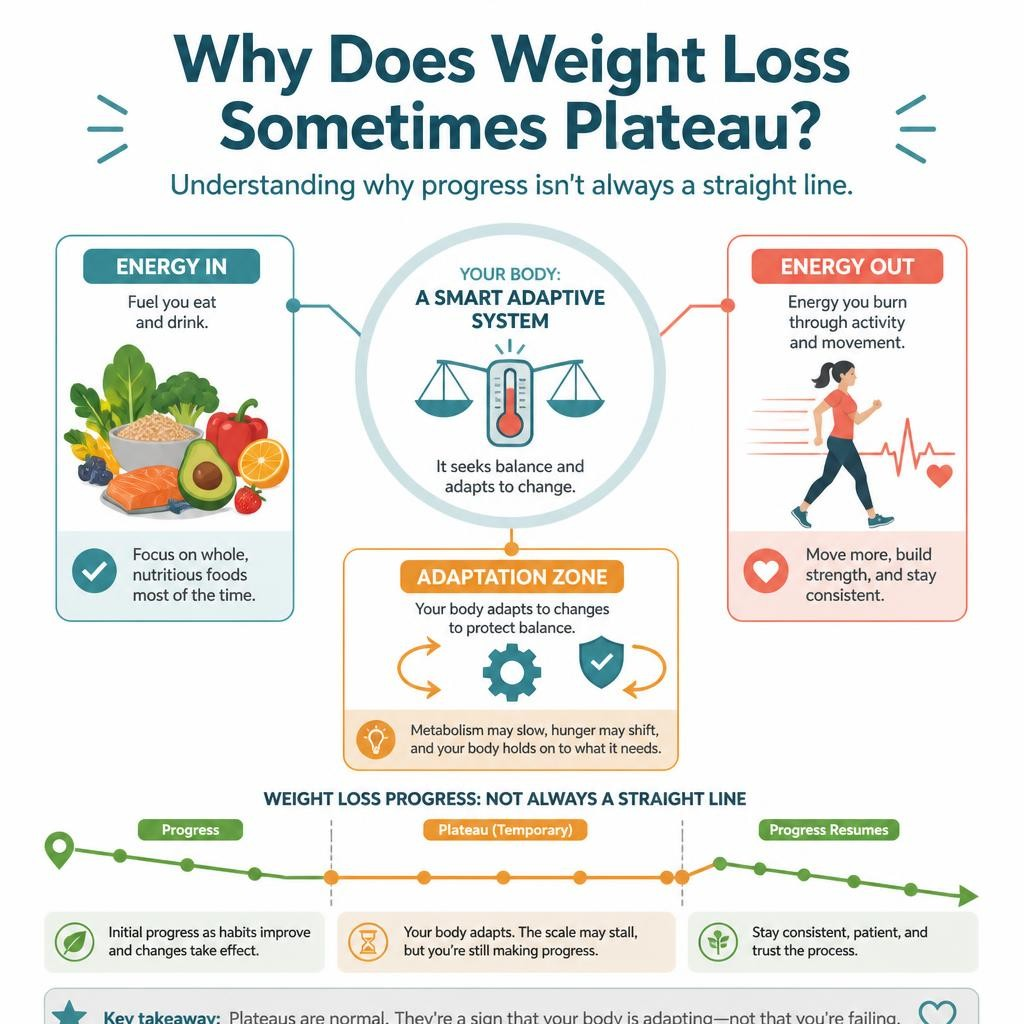
Why Does Weight Loss Sometimes Plateau?
You’ve been making changes, watching what you eat, becoming more active, and seeing progress. Then suddenly, the number on the scale stops moving.
Weight-loss plateaus can be frustrating, but they are also a common part of weight management.
A plateau doesn’t necessarily mean you’ve failed or that the healthy changes you’ve made have stopped benefiting your body.
Why Can Weight Loss Slow Down?
Your body isn’t static.
As you lose weight, your body’s energy needs can change. A smaller body generally requires fewer calories than it did at a higher weight. Metabolism can also slow during weight loss, while changes in hormones and appetite may make maintaining weight loss more challenging.
That means an approach that produced steady weight loss initially may eventually produce slower changes.
Weight loss is also rarely a perfectly straight line.
Body weight can fluctuate from day to day due to factors including hydration, sodium intake, digestion, hormonal changes, and other normal processes.
Look Beyond the Scale
The scale provides one measurement, but it doesn’t tell you everything about your health.
You may also notice improvements in:
- Blood pressure
- Blood sugar
- Cholesterol
- Strength
- Endurance
- Mobility
- Energy
- How your clothing fits
- Your ability to perform everyday activities
These improvements matter even when your weight isn’t changing as quickly as you’d like.
Nutrition Still Matters
When progress slows, extreme dieting isn’t necessarily the answer.
A healthy eating pattern that you can realistically maintain over time is generally more useful than repeatedly starting and stopping highly restrictive diets.
Consider looking at your overall eating habits, including:
- Portion sizes
- Protein sources
- Fruits and vegetables
- Whole grains
- Beverages
- Snacks
- Foods that may have gradually returned to your routine
Small adjustments may be more sustainable than completely changing everything you’re eating.
Don’t Forget About Physical Activity
Physical activity provides benefits far beyond burning calories.
Regular activity can support cardiovascular health, mobility, strength, mood, and long-term weight management.
Strength-building activity is particularly valuable because maintaining muscle is important during weight loss.
General physical activity recommendations for adults include both aerobic activity and muscle-strengthening activities, although individual recommendations may vary depending on health conditions and physical ability.
Sleep and Stress Count Too
Weight management isn’t only about food and exercise.
Sleep, stress, medications, health conditions, hormones, genetics, environment, and other factors can influence weight and appetite.
This is why two people following similar routines may experience very different results.
A Plateau Doesn’t Erase Your Progress
Sometimes the best response to a plateau isn’t to make drastic changes.
Instead, it may be helpful to review your habits, recognize the progress you’ve already made, and determine whether small adjustments are appropriate.
For some people, maintaining weight after losing it is itself an important accomplishment.
Even modest weight loss can provide meaningful health benefits for people with overweight or obesity, particularly when weight-related conditions such as hypertension or diabetes are present.
Final Thoughts
Weight-loss plateaus can be frustrating, but progress isn’t always measured by the number on the scale.
Sustainable nutrition, regular physical activity, adequate sleep, and other healthy habits continue to support your health even during periods when your weight isn’t changing.
If you’ve experienced a prolonged weight-loss plateau or have questions about your weight-management plan, talk with your healthcare provider about your individual needs and whether adjustments may be appropriate.


